Building an Enterprise Anycast CDN at the Network Edge
This series is a theory — my theory. It is not presented as a standard, a prescription, or a finished product, but as a deliberate exploration of an idea that emerges from operating large networks over time. Some parts are well‑understood practices; others are hypotheses tested through reasoning, experience, and constraint. Like any good theory, it is meant to be examined, challenged, adapted, and occasionally rejected. What follows is an attempt to think clearly and honestly about what might be possible, not to declare what must be done.
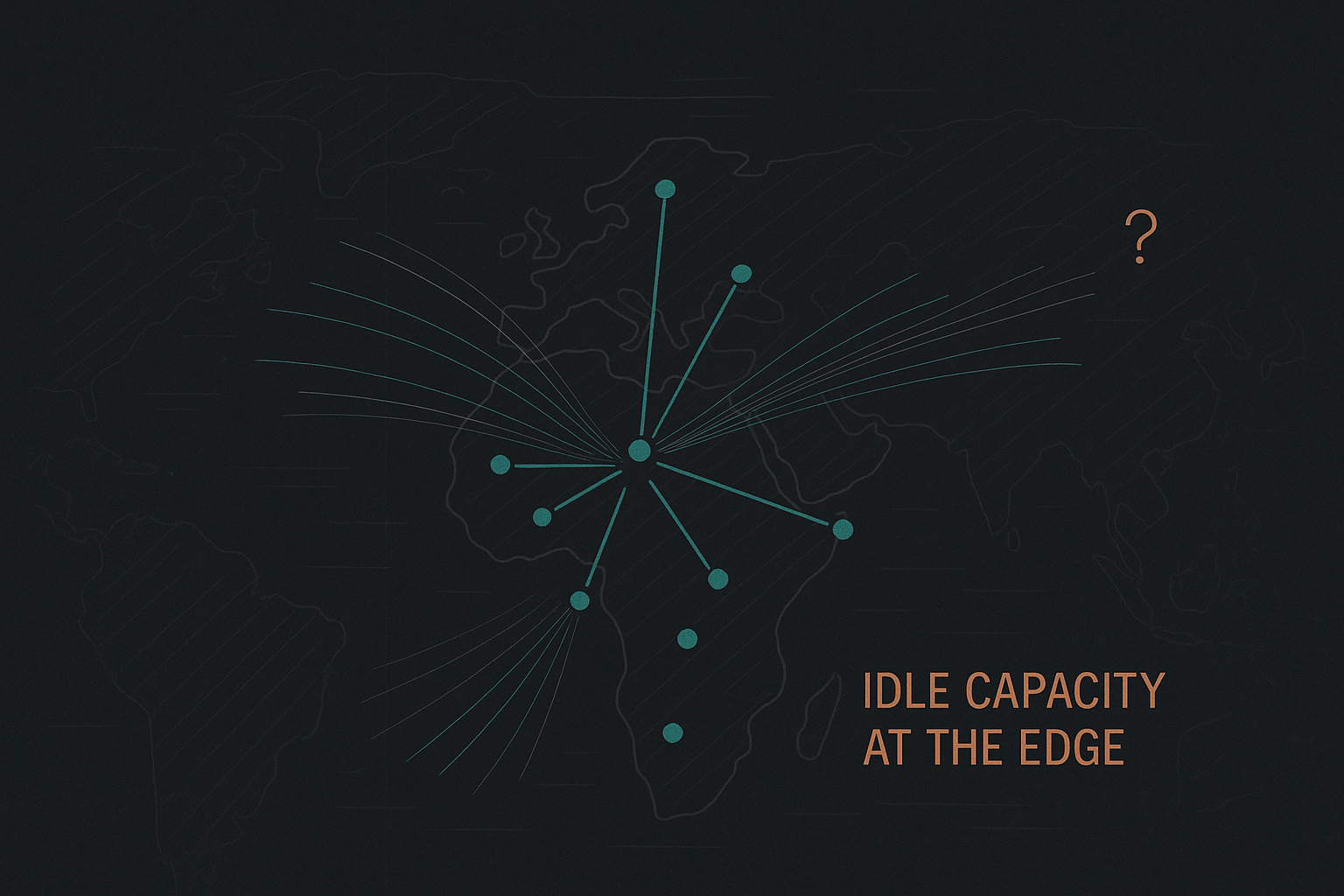
Section 1 — Why You Might Build This (and Why You Probably Won't)
This is not for everyone.
If your organization uses a fully managed global edge platform, where BGP is abstracted away and traffic simply "arrives where it should," then much of what follows will feel unnecessary, overly complex, or even counter‑productive.
This series is written for a narrower audience: enterprises that already operate their own networks at scale, have direct Internet connectivity at many sites, and want to make more intentional use of that capability.
In particular, it assumes an environment where:
- Sites have direct Internet connections with static IP addressing
- BGP peering with upstream providers is available
- There is operational comfort with routing, not just consuming it
- Private WAN connectivity (such as MPLS) may exist alongside Internet access
For organizations in this position, there is often a large amount of idle or underutilized bandwidth sitting at the edge — bandwidth that exists primarily for inbound traffic, redundancy, or historical reasons. This series explores how that capacity can be repurposed to provide real, customer‑visible value.
What Problem Are We Actually Solving?
Enterprises with a global footprint increasingly face a familiar tension:
- Customers expect low latency and local responsiveness
- Services must survive partial failures and regional outages
- Internet paths are unpredictable
- Centralized platforms create external dependencies and opaque failure modes
At the same time, many enterprises already have something resembling a global edge:
- Dozens or hundreds of Internet‑connected sites
- Presence in the same regions as their customers
- Existing internal load balancers and health systems
- A private WAN that can often outperform the public Internet during incidents
The question is not whether these organizations could build something akin to a CDN or anycast network.
The question is whether they can do so safely, deliberately, and without creating new failure domains.
What This Series Is — and Is Not
This series is not a vendor comparison. It is not an argument against managed edge providers. It is not a claim that every enterprise should run its own CDN.
Instead, it is a practical exploration of what becomes possible when:
- You already operate the edge
- You already speak BGP
- You already have global reach
- And you want more deterministic control over how traffic enters and moves through your network
Each section will take one foundational idea — anycast ingress, overlay routing, service health signaling, private transport, security boundaries — and examine it in isolation before showing how the pieces fit together.
A Note on Safety and Intent
The unifying theme throughout this series is intentional constraint.
At every layer, we will assume:
- Nothing is trusted implicitly
- Every routing decision is scoped
- Every optimization is optional
- Every failure is contained
The goal is not maximum cleverness. The goal is a system that remains understandable under stress.
In the next section, we will start with the most visible component: anycast at the enterprise edge, and why reachability and correctness must be treated as separate concerns.